

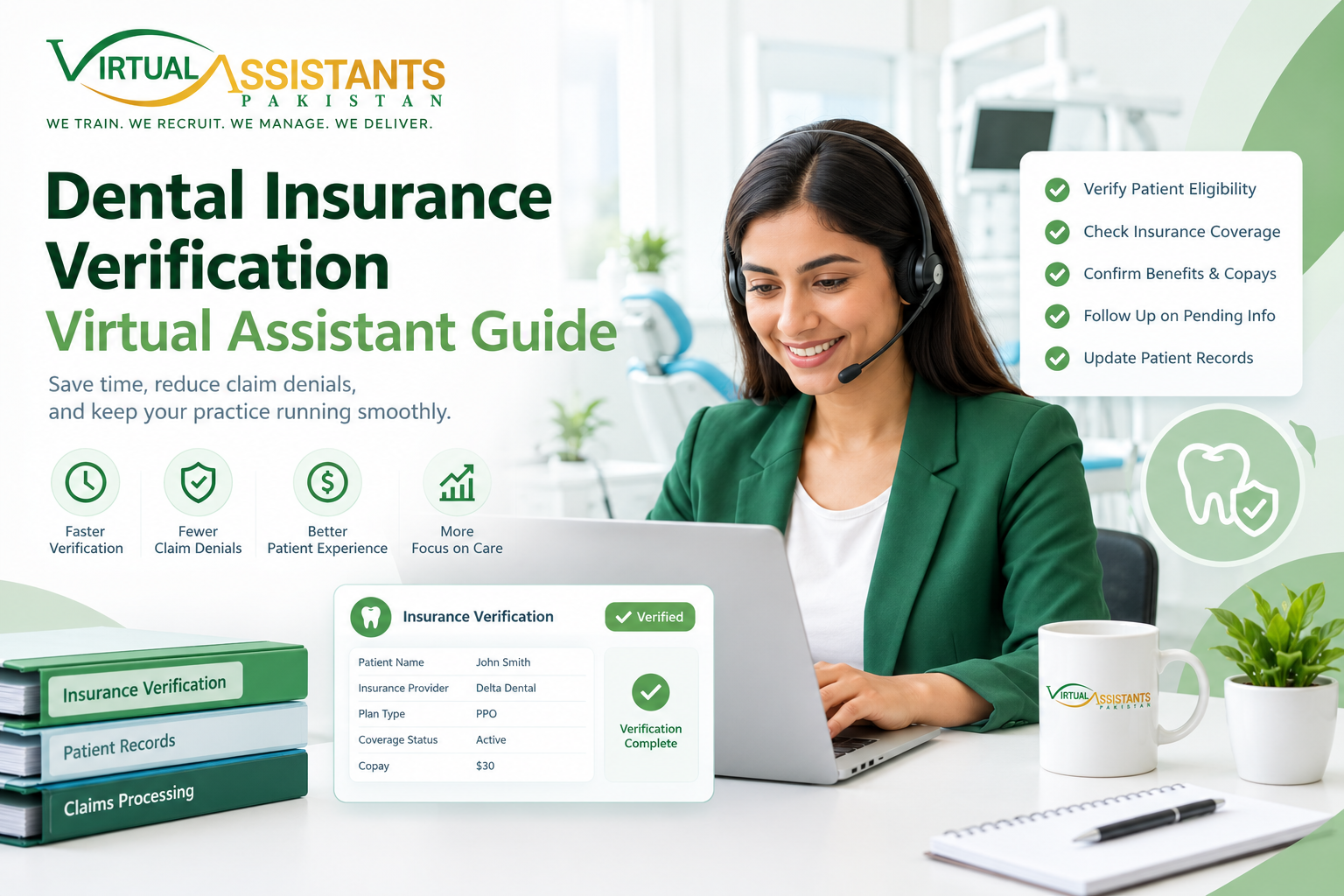
A patient arrives for a crown, only to learn their plan covers a lower percentage than expected or that the annual maximum is nearly used up. The patient is upset, the front desk is stuck, and the practice may end up writing off part of the fee. Most of these surprises are avoidable with verification done before the visit. A dental insurance verification virtual assistant can take that daily task off your team and complete it consistently.
This guide explains what should be verified, how a remote assistant works through the process, the tools and access needed, how to protect patient data and how to measure results. It is written for dental practice owners, office managers and DSO leaders in the United States who want fewer claim surprises and a lighter front-desk workload.
Dental plans differ more than most people expect. Two patients with the same insurer can have different coverage percentages, waiting periods, frequency limits and remaining annual maximums. If the practice does not check these details in advance, the patient is quoted the wrong estimate, the claim is paid differently than expected or treatment is delayed.
Consistent verification protects revenue, reduces awkward conversations at the front desk and gives patients a more accurate estimate before they accept treatment. It is also time-consuming. Phone calls and portal checks take hours across a week, which is why many practices outsource dental insurance verification to trained remote staff.
| Item | Why it matters |
|---|---|
| Active coverage and effective dates | Confirms the plan is current on the date of service. |
| Subscriber and patient details | Name, date of birth and ID must match the payer’s records. |
| Network status | In-network and out-of-network benefits can differ significantly. |
| Deductible and amount met | Affects what the patient owes at the visit. |
| Annual maximum and remaining amount | Determines how much coverage is left this year. |
| Coverage by category | Preventive, basic and major services are often covered at different percentages. |
| Frequency limits | Limits on cleanings, exams and X-rays can lead to denials. |
| Waiting periods and exclusions | Some plans delay coverage for certain procedures. |
| Missing tooth clause and downgrades | May reduce payment on implants, bridges or composite fillings. |
| Predetermination or prior authorization | May be required or advisable before higher-cost treatment. |
| Coordination of benefits | Needed when a patient has more than one plan. |
Exact terms depend on the plan, so the dental insurance verification virtual assistant should record what the payer states for each patient, not assume coverage from a similar plan.
| When | Action | Output |
|---|---|---|
| 2 to 3 business days before the visit | Verify eligibility and benefits for scheduled patients. | Completed verification note in the chart. |
| Day before | Recheck new patients and high-value treatment appointments. | Updated notes and flagged issues. |
| Same day | Resolve last-minute changes or missing details. | Front desk is informed before check-in. |
| After treatment is planned | Request predetermination if needed. | Tracked request with reference number. |
| Start of benefit year | Re-verify returning patients with active treatment. | Refreshed deductibles and maximums. |
These timings are a starting point. Adjust them to your schedule, payer turnaround and appointment volume.
Because payer phone lines operate on US business hours, agree working shifts that overlap with them. For ideas on how remote support fits dental offices, read our article on the benefits of virtual assistants in dentistry, and see how systems connect in our guide to EHR integration with medical virtual assistants.
Hiring a dental insurance verification virtual assistant means sharing patient identifiers and insurance details, so treat access seriously. Give only the permissions the role needs, use unique logins, enable two-step verification, avoid sharing data over personal email or chat, and keep a written confidentiality agreement in place. Have your compliance lead confirm the privacy and security requirements that apply to your practice, including any agreements needed with outside service providers.
| Measure | What it tells you |
|---|---|
| Share of appointments verified before the visit | Whether the process is keeping up with the schedule. |
| Claim denials linked to eligibility | Whether verification is catching coverage problems. |
| Patient estimate accuracy | How often final patient costs match the quoted estimate. |
| Turnaround time per verification | Whether work is completed on time. |
| Front-desk time saved | Hours returned to patient-facing work. |
Record a baseline for two weeks before you hand the task to a dental insurance verification virtual assistant, then compare monthly. The numbers will vary with your payer mix and volume, so use your own data rather than general claims.
If you are comparing options, our healthcare virtual assistant service covers verification along with other front-office and billing support.
If verification takes hours of your team’s week or surprises keep reaching patients, a dental insurance verification virtual assistant can help even a small practice.
They confirm eligibility and benefits before appointments, record them in a standard format, flag problems and update details when plans or treatment change.
Many practices verify a few business days before the visit and recheck new patients or major treatment closer to the date.
It can be when access is limited, logins are individual, confidentiality terms are signed and your compliance lead has reviewed the setup.
Yes, if working hours overlap with payer phone hours and the practice has authorised them to act for verification purposes.
Verification confirms coverage and benefits. Predetermination asks the payer to estimate what it would pay for planned treatment before it begins.
No. A verification reflects what the payer states at the time, and payment still depends on the claim, the plan terms and later changes.
Your practice management system, payer portals and any eligibility or messaging tools you use. Training on your setup is part of onboarding.
Review a sample each week, compare notes with payer responses and track denials caused by eligibility issues.
Get a trained dental insurance verification virtual assistant to verify benefits, flag issues and keep your schedule ready for treatment.
Explore Healthcare Virtual AssistantsDisclaimer: This article is general information, not legal, compliance or insurance advice. Plan terms and privacy requirements vary, so confirm details with the payer and your compliance professional.
We typically reply in minutes
👋 Welcome! Tell us a little about yourself and we'll help you find the right virtual assistant.
WhatsApp us