

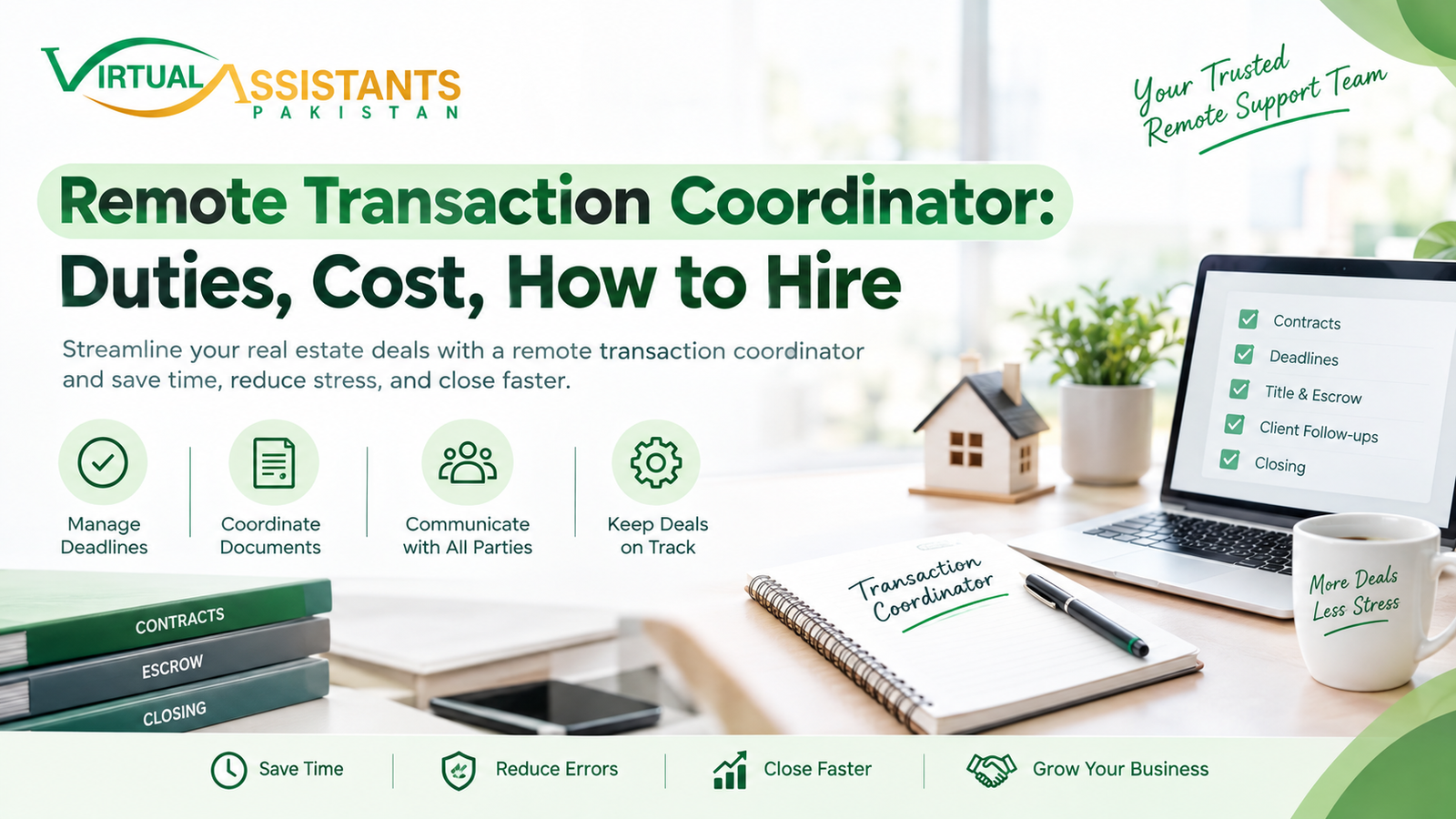
Every accepted offer creates a stack of deadlines, documents and messages that must be managed until closing day. Agents who handle all of it themselves lose selling time, and small slips can put a deal at risk. A remote transaction coordinator takes over that process from contract to close, so agents can keep prospecting and serving clients.
This guide explains what a remote transaction coordinator does, what the work should and should not include, how pricing models work and how to hire one safely. It is written for agents, team leaders and brokerages considering a virtual transaction coordinator.
A transaction coordinator (TC) keeps a real estate deal organised after the contract is signed. The TC tracks contract dates, collects and files documents, communicates with the lender, title or escrow company and other parties, and reminds the agent and client about what is due. The aim is a smooth, on-time closing with a complete file.
Set up the transaction in your system, review the signed contract for key dates, create the timeline, introduce the parties and send welcome messages with clear next steps.
Track dates for items such as earnest money, inspections, financing, appraisal and other contingencies as stated in the contract. Send reminders and update the agent when something is at risk of slipping.
Request, organise and check documents, route forms for e-signature and make sure the brokerage’s compliance checklist is complete.
Keep the lender, title or escrow officer, inspectors and clients informed, log updates and flag open questions for the agent.
Confirm that closing items are ready, coordinate the closing schedule, complete post-closing paperwork, archive the file and prepare commission paperwork for the agent or brokerage to process.
| Phase | Key tasks | Result |
|---|---|---|
| Contract received | Open file, map dates, introduce parties | Clear timeline everyone can see |
| Under contract | Track deadlines, chase documents, update clients | No missed dates or missing items |
| Pre-closing | Confirm readiness, coordinate with title or escrow | Smooth closing schedule |
| Post-closing | Complete paperwork, archive, prepare commission details | Complete, compliant file |
Rules differ by state and brokerage, so confirm with your broker what tasks can be delegated.
Pricing varies widely, so compare models rather than single numbers and ask each provider for current rates in writing. The most common structures are:
| Model | How it works | Best for |
|---|---|---|
| Per transaction | A fixed fee for each file coordinated. | Agents with uneven volume. |
| Hourly | Pay for time spent on tasks. | Variable or mixed workloads. |
| Monthly retainer | A set monthly fee for an agreed scope or number of files. | Teams with steady volume. |
| In-house employee | Salary plus overhead and equipment. | Large teams with constant demand. |
Factors that change a virtual transaction coordinator’s price include monthly volume, file complexity, the number of tools involved, hours of coverage and whether extra services such as listing coordination are included. When you evaluate the cost of a remote transaction coordinator, compare what is covered, not only the headline fee.
| Option | Advantages | Watch-outs |
|---|---|---|
| In-house TC | Close control and daily availability. | Highest fixed cost; no cover during leave. |
| Freelance remote TC | Flexible, often per-file pricing. | Single point of failure; check backup coverage. |
| Agency or managed VA | Backup staff, training and replacement support. | Confirm who actually works on your files. |
Real estate files hold personal and financial details, so a remote transaction coordinator must follow strict security habits. Use a password manager and two-step verification, share documents through a secure system, limit access to active files and train everyone to treat payment-instruction changes as high risk. Always confirm changes to wiring details by calling a known number, never by replying to an email.
In week one, share your checklists, templates and tools. In weeks two and three, assign live files with review before anything goes to clients. By week four, move to spot checks and a short weekly report on files, deadlines and issues. If you want help finding the right support, explore our virtual assistant for real estate agents, and read how a real estate virtual assistant in the USA can fit into a team.
They manage deadlines, documents and communication from contract to closing, keeping the file complete and the parties informed.
It depends on the model (per file, hourly, retainer or salary), your volume and the scope. Ask providers for written, current rates and compare coverage.
It can be, if the processes, tools and communication are clear. Many agents use remote coordinators to scale without adding fixed costs.
No. Legal interpretation and negotiation belong to the agent, broker or an attorney, depending on your state rules.
Not necessarily. Many agents add one when volume grows or when admin work starts costing them selling time.
Typically a CRM, a transaction management or document platform, e-signature software and shared calendars.
Use secure sharing, limited access, two-step verification and a strict process for verifying payment changes.
Assign a real or sample file, review the timeline and communication, and give feedback before assigning more.
Tell us your volume and tools and we will match you with a trained remote transaction coordinator or assistant for your transactions.
Explore Real Estate VA ServicesDisclaimer: This article is general information, not legal or licensing advice. Requirements vary by state and brokerage, so confirm what tasks can be delegated with your broker.
We typically reply in minutes
👋 Welcome! Tell us a little about yourself and we'll help you find the right virtual assistant.
WhatsApp us